
Menopause brings mountains of challenges. Brain fog, extreme fatigue, and memory loss are just a few of the symptoms facing those experiencing this process. Hormone therapy is the most effective way to face menopause struggles, but it is not the only option. Exercise has been proven to help reduce severe menopause symptoms.
It can be used in conjunction with other therapies or make a significant impact on its own when used consistently, so it might be smart to pull out the kicks in addition to the patches.
Here’s Why Repin and Peloton Have Partnered
The innovative fitness platform Peloton and Respin Health, a menopause-centered wellness platform founded by Academy Award-winning actress Halle Berry, partnered on a recent study to assess whether sweating could relieve menopause symptoms. The ‘P.R.E.S.S.’ study ran for eight weeks and used a holistic approach to evaluating participants.
It included results from 267 Peloton members aged 40 to 65 who received personalized plans to manage their health during this period. These plans accounted for their schedules rather than overwhelming them. Customization is central to both companies’ offerings.
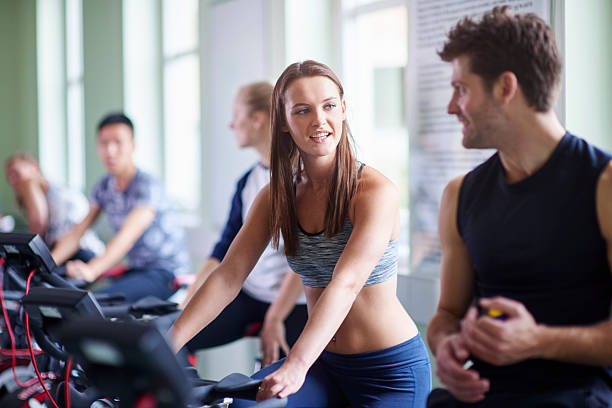
The workouts ranged from using the iconic Peloton stationary bike to hiking, boxing, and other forms of movement. Flexibility put participants in control of how they presented.
There is No Such Thing as a Menopause Workout
“There’s not a single magic menopause workout, and you don’t have to do it ‘perfectly’— we saw improvements across the board, without perfect adherence or strict protocols,” Elizabeth Knight, Head of Science & Research at Respin Health, told Black Health Matters in a statement.
Those who reported being tired and worn out showed a 26% improvement in their symptoms. Brain fog decreased by 34% among participants. Weight gain was reduced by 41%.
How Menopause Impacts Black Women Differently
Black women are particularly vulnerable to severe menopause symptoms, according to a 2025 survey in Preventive Medicine Reports. “African American women have an earlier onset and increased burden of menopause symptoms, including vasomotor symptoms,” according to the American Journal of Public Health.
Halle Berry Has Become a Strong Advocate for Menopause Research
Berry has been a strong advocate in the fight against menopause related suffering. She supported a bill to increase the limited research funding for menopause and to educate healthcare professionals on the topic. She works to decrease the stigma surrounding the subject. “Women talk about puberty, periods, pregnancy, and postpartum, but not menopause. We don’t talk about heart palpitations, anxiety, or depression,” Berry told ESSENCE. “That has to change. We need to talk about menopause as easily as we talk about puberty.”
Using her voice to advocate for health initiatives is nothing new to the Never Let Go star. Berry has also lent her voice to raising awareness about the nuances of diabetes, a condition that disproportionately impacts Black people.
She is one of several public figures who have spoken openly about menopause in recent years, reflecting evolving attitudes toward the topic.
Screen and Broadway star Vanessa Williams recently spoke about how it affected her. Former First Lady Michelle Obama shared her thoughts on the topic in 2022.
Some Key Findings From the Study
35 symptoms were measured as part of the P.R.E.S.S. study. Other significant areas of improvement included anxiety and mood, hot flashes and sweating, and body aches. The study reported that “Symptom improvement may function as the gateway to improve cardiovascular health, bone health, and brain health.”
“The key components we identified from existing research are consistent, progressive strength training, high-intensity interval training, and dedicated recovery,” Knight continued. “Rather than reinvent the wheel, we looked at these proven strategies in combination, in a real-world setting. And we saw a remarkable improvement across all symptoms by the end of the study.”
The P.R.E.S.S. study used a widely accepted measurement tool to verify and present its findings.
“We measured symptoms using a validated tool called the Menopause-Specific Quality of Life scale, along with six additional symptoms frequently reported by our members. MENQOL is trusted by doctors and used in research, so we can show how our results stack up against other approaches,” Knight explained. “Using this tool, we were able to show that women were significantly less bothered by their menopause symptoms at the end of the 8-week study than they were at the beginning.”
Movement Can Be Medicine for Menopause
“The improvements reported by this group reinforce what we have always known: movement is medicine and a catalyst for transformation,” said Jen Cotter, Chief Content Officer at Peloton.
The Journal of Clinical Medicine and the Journal of Experimental Physiology have documented the value of exercise during menopause in prior studies.
“The existing science is clear that consistent, progressive exercise is one of the most powerful ways to feel better and promote long-term health,” adds Knight. “Everyone can benefit.”
Resources

![Vegan Chocolate Chip Coffee Cake [gluten-free + date-sweetened]](https://i0.wp.com/healthyhelperkaila.com/wp-content/uploads/2025/04/CoffeeCake3.png?resize=525%2C700&ssl=1)





![High Fiber, High Protein Skillet Brownie [no sugar added]](https://i0.wp.com/healthyhelperkaila.com/wp-content/uploads/2026/01/BrownieSkillet3.png?fit=800%2C800&ssl=1)






 English (US) ·